How to Build a Revision System That Actually Lasts
A practical framework for turning a crowded syllabus into calm, repeatable weekly progress that compounds over time.
D
Dr. Elin Moore24 Jul 2026
Research-backed advice, exam strategies, writing guidance and healthcare prep tips from our team of academic specialists and certified exam coaches.
The NCLEX has changed. Here is your complete guide to the new clinical judgment model, NGN item types, and how to prepare effectively.
The Next Generation NCLEX represents the most significant change to nursing licensure in decades. The new exam tests clinical judgment—not just knowledge recall—through innovative question formats including case studies, extended multiple response, and matrix items. This comprehensive guide explains every new item type and gives you a strategy for mastering the Clinical Judgment Measurement Model.

A practical framework for turning a crowded syllabus into calm, repeatable weekly progress that compounds over time.

Learn the difference between reporting sources and creating a persuasive academic line of reasoning your examiner will remember.

What to revise, what to leave alone, and how to protect your focus when it matters most on exam day.
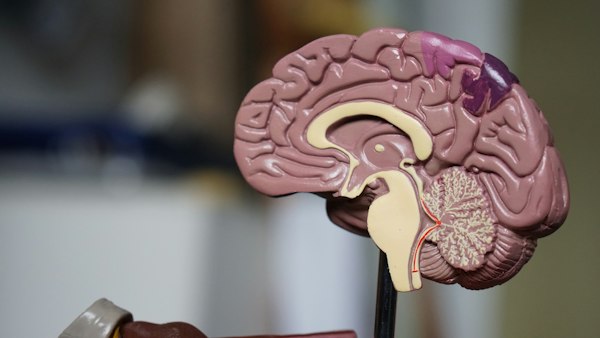
The NCLEX has changed. Here is your complete guide to the new clinical judgment model, NGN item types, and how to prepare effectively.

Raise your verbal score with these proven techniques for text completion, sentence equivalence, and reading comprehension.

Anatomy, physiology, biology, and chemistry—master the TEAS science section with this structured four-week roadmap.
Most GRE test-takers treat Text Completion like a vocabulary test. That instinct costs them points.
The TEAS 7 Reading section is not a test of how fast you can skim. It is a test of how precisely you can do one thing: figure out why a passage exists.
Balancing chemical equations is one of the most feared question types on the HESI A2 Chemistry section — and one of the most trainable.
The GED Social Studies test is mostly multiple choice — but a handful of short-answer items are where students lose points they could have easily banked.

You're thirty minutes into an online midterm when a prompt appears: "Please slowly pan your webcam around the room.

Studying for the GED or the TEAS can feel like a solo expedition. You're supposed to master years of material while holding down a job, managing family...

Quantitative Comparison (QC) questions are the most misunderstood item type on the GRE.

Nursing school admissions run on numbers — but not all numbers are created equal. Your TEAS or HESI report arrives with a whole stack of figures: a composite...

You finished a high-stakes exam feeling good — and then the score landed like a door slammed shut. Twenty points below every practice test.
Multiple-choice questions are not fair. They are engineered artifacts — built by humans, refined by psychometricians, and loaded with features designed to...
Every student knows the feeling: the research is done, the argument is airtight, but the paper reads like boxes bolted together — each paragraph solid on its...

Legal citation has a reputation for being arcane — and it earned it. The Bluebook: A Uniform System of Citation, the citation manual used by law students and...

The lab report is where college science students lose the most marks for the least educational reason.

The fellowship letter of intent is the document where ambitious applications go to die — quietly, politely, and in the first paragraph.

Most students search academic databases the way they search Google: one or two words, hit enter, scroll.
Ask a professor why a paper earned a B+ instead of an A, and the most common answer is a single word: analysis.
The thesis statement is the highest-leverage sentence in any college paper — and the one students treat as a fixed, unchangeable artifact.
The capstone proposal is the document where many students discover — far too late — that their research idea needs to be a plan, not just a passion.

The counter-argument is the most feared paragraph in the undergraduate essay — and the most misunderstood.

You've written the paper. You've revised the argument. You've tweaked the thesis at midnight.

You're enrolled at your home college, taking a class at a community college down the road, and holding a certificate course at a third institution — all...

The distance-learning student's workspace has a quiet crisis: your academic life is spread across a laptop, a tablet, a phone, a learning-management portal, a...

Every online student has felt it: the uneasy sense that the LMS knows more about your study habits than your professor lets on. The feeling is accurate.

International students studying online face an unusual paradox: their education exists entirely in the cloud, but their legal status is anchored to very...

The discussion board is where earnest students produce some of the worst academic writing of their lives — politely.

Somewhere around the third chapter of dense academic reading, most students discover an uncomfortable fact: their eyes are racing ahead of their comprehension,...

Every online student eventually meets the ghost: the group member who exists in the roster, was present for the first planning message, and then vanishes — no...
Somewhere in a folder, a hard drive, or a pile of spiral notebooks live the hundreds of hours you spent on college assignments: the lab reports, the code...

Distance learning solves logistics and creates isolation. The same infrastructure that lets you attend class from anywhere removes the physical campus where...

The choice between a fully online university and a hybrid program at a state university is one of the most consequential decisions a distance-learning student...
Join 4,200+ learners who receive weekly exam strategies, writing tips and prep guides from our academic team. No spam, unsubscribe anytime.
We respect your privacy. Unsubscribe at any time.
Put our advice into practice with personalized tutoring, structured prep courses, and professional exam coaching.