How to Build a Revision System That Actually Lasts
A practical framework for turning a crowded syllabus into calm, repeatable weekly progress that compounds over…
Learn the difference between reporting sources and creating a persuasive academic line of reasoning your examiner will remember.

The most common mistake in academic writing is confusing description with analysis. A strong academic argument does not simply present what others have said — it synthesizes, evaluates, and builds a clear position. Examiners read hundreds of essays that summarise sources accurately but never take a stance. The ones that stand out are those with a clearly constructed line of reasoning the reader can follow from introduction to conclusion.
Remember: every paragraph should make a specific claim, support it with evidence, explain what that evidence shows, and connect it back to your thesis.
Descriptive writing tells you what happened or what a source says. Analytical writing tells you what it means and why it matters. Consider the difference between these two sentences: "Smith (2020) argues that early intervention improves outcomes" — this is description. "Smith's (2020) evidence for early intervention is compelling but limited to a specific demographic; when read alongside Jones (2019), it becomes clear that context determines effectiveness" — this is analysis. The second sentence does not just report — it interprets, compares, and builds a position. Every paragraph in your essay should move towards this kind of analytical depth.
Your argument starts with a thesis — a precise, debatable claim that your essay sets out to support. A good thesis is not a question and not a statement of fact. It is a position that requires evidence. "There are many factors that affect student performance" is a non-thesis — it is obvious and requires no argument. "Formative assessment has a stronger impact on long-term student performance than summative testing, particularly in subjects requiring applied reasoning" is a thesis — it makes a specific claim that can be supported, qualified, and challenged. Write your thesis before you begin drafting and return to it after every paragraph to check that you are still on track.
Each body paragraph should follow a consistent structure: Point, Evidence, Explanation, Link. Begin with a clear topic sentence that states the paragraph's argument (Point). Follow with one or two well-selected pieces of evidence — a quotation, statistic, or case study (Evidence). Then explain what the evidence shows and how it supports your thesis (Explanation). Finally, link back to your overall argument or forward to your next point (Link). Writers who struggle with paragraphing often have the evidence right but skip the explanation — they present a quotation and expect it to speak for itself. It never does. Your job is to do the analytical work of connecting evidence to argument.
Strong arguments do not avoid counterarguments — they engage with them. Acknowledging a counterargument and then responding to it demonstrates intellectual confidence and shows your examiner that you have thought critically about the issue. Use phrases like "Critics have argued that..." or "This position is complicated by..." to introduce the counterargument, then explain why your position still holds or how it accounts for the challenge. An essay that concedes nothing feels brittle. An essay that engages with opposing views and still defends its thesis feels rigorous and persuasive.
After drafting, read your essay with one question in mind: does every sentence contribute to the argument? Cut sentences that describe without analysing. Strengthen sentences that make claims without explaining why. Check that your conclusion does not simply repeat your introduction — it should show where the argument has arrived, what has been established, and why it matters. Give yourself at least one full day between drafting and revising so you can read the work with fresh eyes.
Practical, research-informed guidance from our specialist team — for every stage of your academic journey.

A practical framework for turning a crowded syllabus into calm, repeatable weekly progress that compounds over…

What to revise, what to leave alone, and how to protect your focus when it matters most on exam day.…
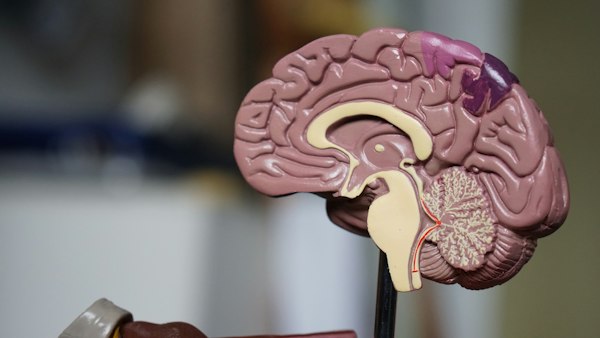
The NCLEX has changed. Here is your complete guide to the new clinical judgment model, NGN item types, and how…
Tell us what exam you're preparing for. We'll build a personalised path to passing.