How to Build a Revision System That Actually Lasts
A practical framework for turning a crowded syllabus into calm, repeatable weekly progress that compounds over…
Every student knows the feeling: the research is done, the argument is airtight, but the paper reads like boxes bolted together — each paragraph solid on its...
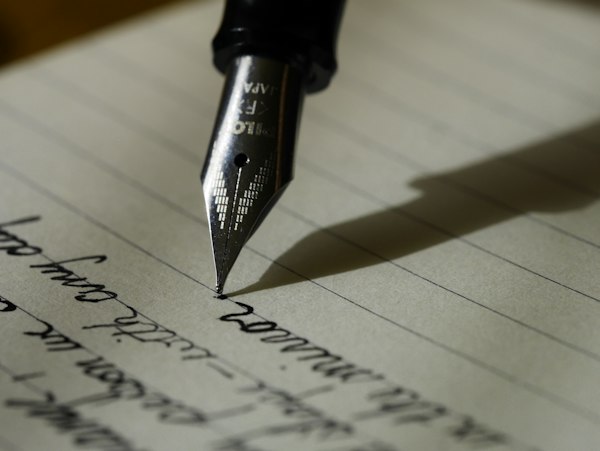
Every student knows the feeling: the research is done, the argument is airtight, but the paper reads like boxes bolted together — each paragraph solid on its own, and the seams showing everywhere. Professors call it "choppy" or "disjointed"; you call it frustrating. The truth is that transition craft is a technique, not a talent. Smooth movement between paragraphs in a long paper comes from three mechanical habits: planning the logical bridge before you write, seeding links in the first sentence of each paragraph, and using a small arsenal of proven transition patterns. Master these and your 20-page paper will read the way professional academic prose reads — as one continuous argument, not a series of exhibits.
Key insight: Strong paragraph transitions in long papers do not just connect sentences — they show the reader how each section builds on the last to advance the overall argument.
In a five-page essay, readers can hold the whole structure in their heads; a choppy link goes unnoticed. At twenty pages, the reader's working memory is overloaded, and every missing bridge becomes a cognitive tax. This is why transition quality is the single fastest way to signal seriousness in a long paper: graders interpret seamlessness as mastery of the material. The mechanics that follow are the tools for manufacturing that seamlessness on purpose.
Transitions cannot be fixed at the end — they're structural, and structure is planned up front. Before drafting, reduce your paper to a one-sentence map: a sequence line like "context → problem → cause A → cause B → consequence → counterargument → resolution." This map serves two purposes: it tells you the logical distance between consecutive paragraphs (close = light bridge; far = heavy bridge), and it exposes illogical ordering before you write 1,000 words of prose that will need reassembly. Every later transition decision is a question you ask against the map: What did the last paragraph establish, and what does the next one need? The bridge sentence is the answer.
The most reliable structural habit in professional academic writing: the first sentence of each body paragraph should connect backward before it moves forward. It should do one of three jobs: 1. Anchor: refer explicitly to the previous paragraph's claim ("This strain on municipal budgets also explains the second consequence…"). 2. Pivot: acknowledge then redirect ("The economic case is strong; the legal case, however, rests on shakier ground…"). 3. Zoom: narrow from the last paragraph's general point to this paragraph's specific one ("Within that broader shift, one industry proved especially exposed: …"). Notice what these openings do not do: they don't begin with the new paragraph's subject in a vacuum. Too many students open each paragraph with a fresh noun phrase ("The economy also suffered…") — grammatically fine, structurally orphaned. The bridge-first rule converts every paragraph into a link in a chain.
Beyond single linking words, long papers need pattern bridges — reusable rhetorical moves that carry a reader across larger logical distances. Add these five to your repertoire: 1. The Echo Bridge: Repeat a key word or phrase from the previous paragraph's conclusion as the subject of the new paragraph's first sentence. If paragraph A ends with "regulatory capture," paragraph B opens with "That capture did not occur overnight." The repetition is the bridge; readers glide across it without noticing the seam. 2. The Question Bridge: Convert the previous paragraph's implication into a question the new paragraph answers. Paragraph A establishes the data gap; paragraph B opens, "How, then, do researchers measure what cannot be observed directly?" The question sets up the new paragraph as the answer — an inherently linked structure. 3. The Contrast-and-Continue Bridge: Acknowledge the previous paragraph's viewpoint, then state the new paragraph's difference, explicitly: "Where the previous section emphasized institutional causes, the following one turns to individual agency." This is the workhorse of papers with opposing theories, and it is maximally clear — sometimes at a slight cost of elegance, which is a fair trade in a 20-page argument. 4. The Consequence Bridge: Close paragraph A with an event or finding; open paragraph B with its consequence. "The statute's ambiguity produced predictable results. Applications slowed to a trickle within two quarters…" This pattern pretends nothing — the link is causal, which is what most academic arguments are made of. 5. The Climax Bridge (for longer arcs): In a paper with multi-page sections, you need section-level transitions, not just paragraph-level ones. A short "signpost" sentence at the end of a section — "With the historical context established, the analysis turns to the present data" — gives the reader a moment to reset before the next unit. Use these sparingly (once per section), precisely because their job is the big reset.
You cannot judge your transitions while reading forward — you're too close to your own argument. The diagnostic that works is the reverse outline: after drafting, list each paragraph's single-sentence summary in order, on a separate page, with nothing else. Then read only that list. • If two consecutive summaries feel disconnected, the paragraph transition is broken — even if the prose looks fine. • If the list itself doesn't form a coherent argument, the problem is deeper than transitions: your paragraph order is wrong, and no bridging can fix it. Do this once mid-draft and once before submission. It is the closest thing to a professor's-eye view of your paper that exists on the student side.
When you find a weak joint in revision, repair it with a three-sentence protocol rather than hunting for a fancier linking phrase: 1. State the previous paragraph's upshot in one clause. ("Having established that the policy failed on cost grounds…") 2. Name the relationship to what's next. ("…the analysis now turns to why it survived politically.") 3. Introduce the new paragraph's claim. ("Survival owed less to public support than to institutional inertia.") Three sentences; every joint in the paper can be rebuilt with some version of this scaffold. The beauty is that the protocol forces you to know the relationship — and if you can't articulate it, you've found a paragraph-order problem, not a wording problem.
• Vary your starters. If six paragraphs in a row open with "Additionally" or "Furthermore," the reader feels the machinery. Rotate through echo, question, and contrast patterns. • Keep bridges proportionally short. A bridge is a handrail, not a railing. One to three sentences — beyond that, you're writing a transition paragraph, which only belongs at section boundaries. • Let the strongest links carry the weakest. The most important junctions in a 20-page paper are the middle of the argument — where the thesis turns from evidence to interpretation. Spend your best transition craft there, not on routine paragraph joints. • Read the paper aloud at a junction. The ear catches what the eye forgives. If the first sentence of a new paragraph forces you to pause and re-orient, the bridge failed.
Smooth transitions in a 20-page term paper are engineered before a single paragraph is drafted: build the one-sentence map, then write each body paragraph's opening as a backward-pointing joint — anchored, pivoting, or zooming — using echo, question, contrast, consequence, or section-level climax bridges. Diagnose with the reverse outline, repair with the three-sentence protocol, and keep the machinery invisible through variety and proportion. Before your next long draft, spend ten minutes writing the one-sentence map — and keep it taped to your screen while you write. Every time you're about to start a new paragraph, glance at the map and ask the bridge question: what does my reader need to carry across this joint? That single habit is the difference between a paper that merely contains twenty pages and a paper that flows as one argument for twenty pages.
Practical, research-informed guidance from our specialist team — for every stage of your academic journey.

A practical framework for turning a crowded syllabus into calm, repeatable weekly progress that compounds over…

Learn the difference between reporting sources and creating a persuasive academic line of reasoning your exami…

What to revise, what to leave alone, and how to protect your focus when it matters most on exam day.…
Tell us what exam you're preparing for. We'll build a personalised path to passing.